
Children are safer at camp when they know a few simple rules and understand why they are important. The trick is to keep the rules short, practice them, and repeat them every trip.
These are the rules most families use, written the way you might explain them to a child. Pick the ones that fit your children's ages and your campsite.
Rule 1: The fire circle
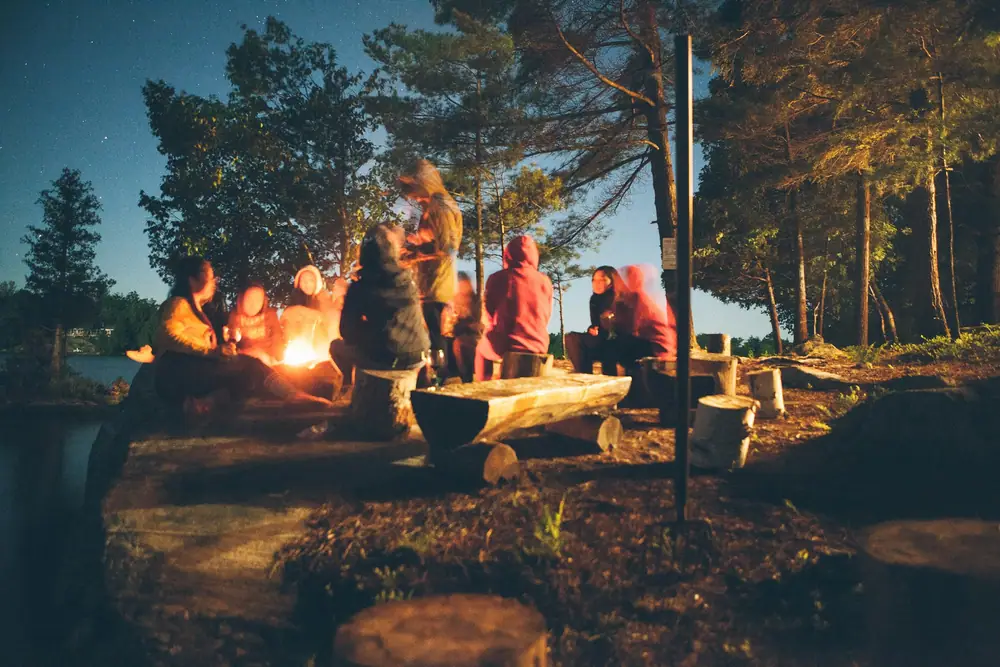
Mark a circle around the fire ring, about three big steps out, using stones or a stick line in the dirt. Children stay outside it unless an adult invites them in, for example to toast a marshmallow. No running near the fire, and no throwing things into it.
Teach older children to stop, drop and roll if their clothing catches fire, and to put a marshmallow stick down flat rather than waving it. When you put the fire out, drown it with water, stir, and drown again until it is cold to the touch.
Rule 2: Stay where you can see the tent
For younger children, a simple rule is "stay where you can see the tent." For older children, set named landmarks: "you can go as far as the big rock and the playground, but not past the road." Walk the boundaries together on arrival so there is no confusion.
| Age | Suggested boundary | Check-in |
|---|---|---|
| Under 5 | Within sight of an adult at all times | Constant |
| 5–8 | Within sight of the tent | Every 15 minutes |
| 9–12 | Named landmarks, with a buddy | At agreed times or a whistle signal |
Rule 3: If you are lost, hug a tree
This is the most important rule to teach. If a child realizes they are lost, they should stop, stay in one place, and "hug a tree" — stay put next to something big until someone finds them. Moving around makes it much harder to find a lost child.
Give every child a whistle and teach them that three blasts means "I need help." Practice at the campsite so they know how loud it is. Dress children in bright clothes, and take a photo of them each morning so you have a record of what they are wearing.
Stop, stay put, blow the whistle. Three short steps that a five-year-old can remember.
Rule 4: No water without a grown-up
Children never go near a lake, river or pond without an adult, even to look. Drowning is fast and silent, and young children can slip in without a sound. Life jackets for weak swimmers, and an adult whose only job is watching the water, whenever children are swimming or paddling.
Rule 5: Wildlife is for watching
Teach children to watch animals from a distance and never to feed them, including squirrels and birds. Food stays at the table or in the car, never in the tent. Show them how to check for ticks at the end of each day, and to tell an adult about any bite or sting.

Rule 6: Use the buddy system
Older children who go to the restroom or playground together are safer and more confident. Pair them up, and make the rule that buddies always come back together.
How to teach the rules so they stick
Before the trip
- Talk through the rules at home
- Practice the whistle and hug-a-tree in the backyard or park
- Let children help write the rules on a card
At camp
- Walk the boundaries on arrival
- Repeat the fire rule when the fire is lit
- Praise children when they follow the rules
Keep the rules positive where you can: "walk near the fire" rather than "do not run." Children respond better, and it gives them something to do rather than something to avoid. For kit to support these rules, see our family first-aid kit checklist.
 How to Choose a Family-Friendly Campsite
 Helping Kids Sleep Well in a Tent
 15 Campsite Activities for Kids of Every Age