
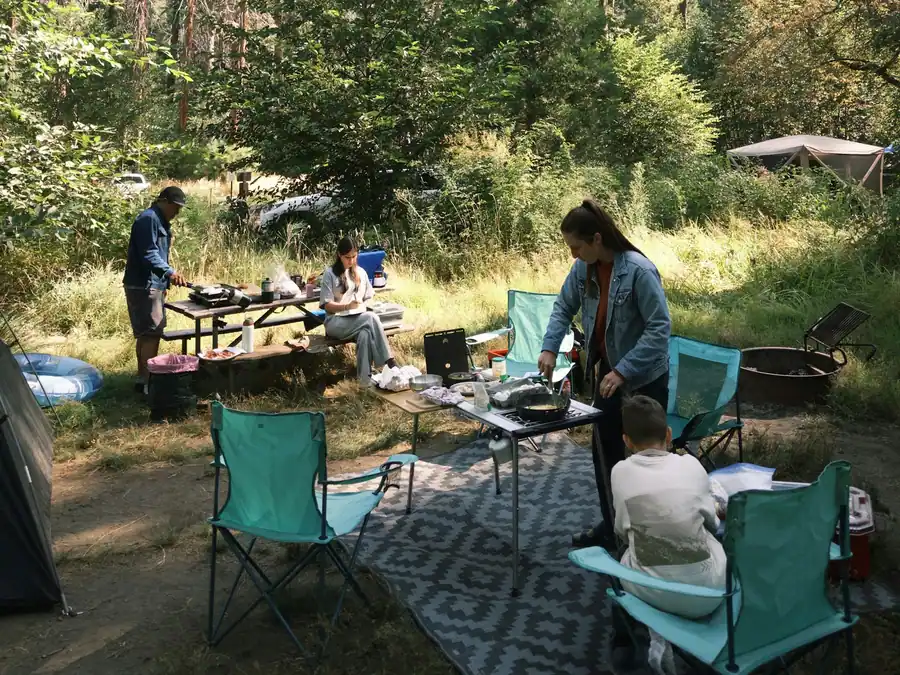
The campsite you book shapes the whole trip more than any gear you pack. With children, the right site is less about the view and more about distance to the restroom, somewhere flat to play and a spot to put the tent that stays dry.
When you book online, you often see only a site number, a photo and a short list of features. It helps to know which of those features really count for families, and which details you should check on a campground map before you commit.
Start with the restroom walk
For families with young children, the walk to the restroom is the most important distance on the map. A three-year-old announcing they need to go "right now" does not leave time for a five-minute walk in the dark. Aim for a site with a restroom within a two-minute walk, and ideally with a clear, lit path.
That said, avoid sites right next to the restroom building. They get foot traffic, door noise and lights all night. Two or three sites away is often the sweet spot: close enough for emergencies, far enough to sleep.
Look for flat, open ground
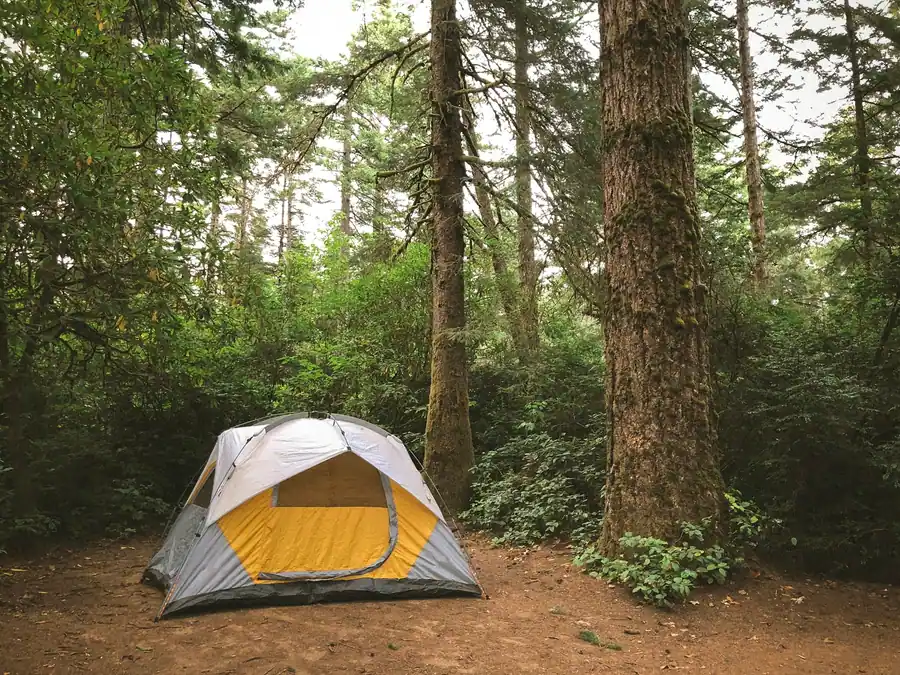
A flat tent pad makes a huge difference to sleep, especially for small children who roll. Campground maps sometimes show which sites have gravel or wooden tent pads; these are usually level and drain well. Next, look for open ground beside the tent where children can play without being on the road or in the neighbors' space. A patch of grass or packed earth is worth more than a lake view if it keeps toddlers busy for an hour.
| Feature | Why it helps with kids | How to check |
|---|---|---|
| Level tent pad | Better sleep, fewer kids rolling into the tent wall | Site photos, campground map, reviews |
| Play space | Somewhere safe to run, dig and play | Site size or dimensions on the booking page |
| Shade | Keeps the tent cooler in the morning and protects from sun | Look for tree cover in photos |
| Distance to water | Lakes and rivers need constant supervision | Map; ask the campground office |
| Distance from road | Fewer cars near playing children | Loop layout on the map |
Water: a draw and a hazard
Lakes, rivers and beaches are among the best things about camping with kids. They are also where most serious worries come from. For toddlers and weak swimmers, a site set back from the water with a clear walk down is often easier than a waterfront pitch, where you are on guard every moment. Save the waterfront site for when children can swim and understand the rules.
A site set back from the water gives you a choice about when the kids are near it. A waterfront site takes that choice away.
Neighbors and noise
Many campgrounds have loops that tend to attract families, and others that attract larger groups or late nights. It is worth calling the campground office and simply asking which loop suits young children. Staff are usually happy to help. Look for loops near a playground or short trails; they tend to fill with families on similar schedules, which means quieter evenings and potential playmates for the kids.
Facilities worth paying for
For a first family trip, a few facilities can make a big difference, and they are worth a small premium:
- Drinking water spigots nearby, so you are not carrying heavy water containers.
- Showers, especially for longer trips or when children get muddy.
- Electric hook-up, if you want to run a small heater or a bottle warmer for a baby.
- Food lockers in areas with bears or other wildlife.
- A playground or visitor center for rainy spells.
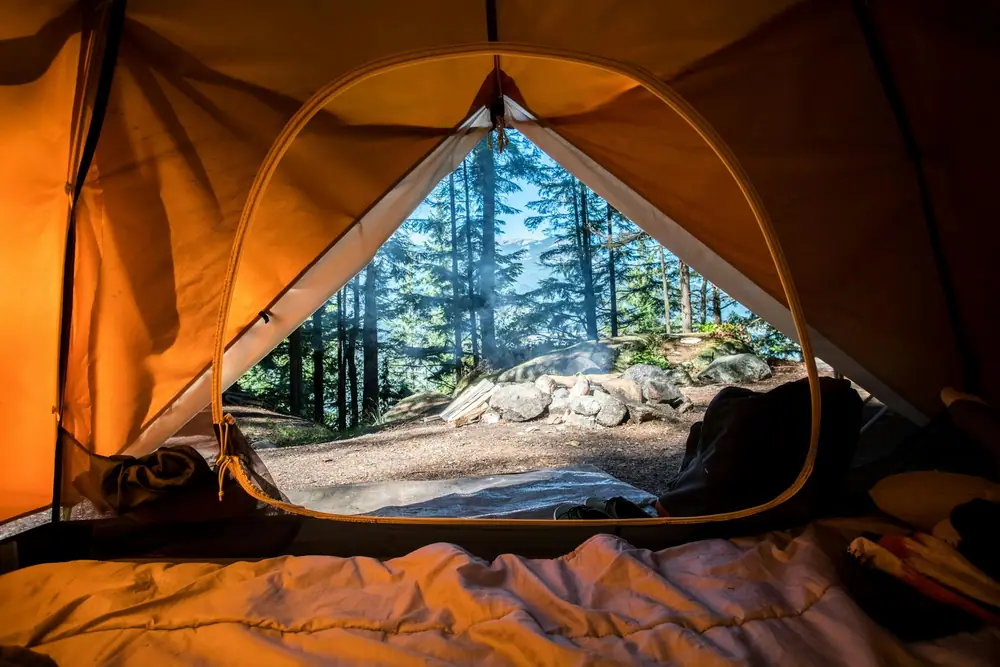
Quick booking checklist
Must have
- Restroom within a two-minute walk
- Level tent area
- Room to play away from the road
Nice to have
- Some shade
- Playground or short trail nearby
- Drinking water spigot close by
Once you have found a site that checks these boxes, book both nights at once and write down the site number, arrival time and office phone number. Then turn to your packing: our family sleep kit checklist is a good place to start.
 Helping Kids Sleep Well in a Tent
 15 Campsite Activities for Kids of Every Age
 Rainy-Day Camping With Kids: A Practical Plan