
Children rarely need entertaining at camp in the way they do at home. The trick is to give them a few ideas to start, a bit of freedom, and the right tools, and then step back.
These activities need little or no special gear. They are grouped by age, but most work across the range; toddlers will just enjoy them differently from a ten-year-old.
For toddlers (1–3)
- Bucket collecting. Give them a bucket and ask them to fill it with pine cones, or leaves, or stones. Then tip it out and start again. It never gets old.
- Water painting. A cup of water and a paintbrush on a flat rock or the picnic table. The "paint" disappears as it dries, so they can repeat it endlessly.
- Stick drums. Two sticks and an upturned pot make an excellent drum kit, as long as the neighbors are not asleep.
- Sensory tray. Put sand, pebbles, pine needles and a few leaves in a shallow tub to explore with their hands.
For preschoolers (3–5)
- Color hunt. Give them a paint chip card or crayons and ask them to find something in nature that matches each color.
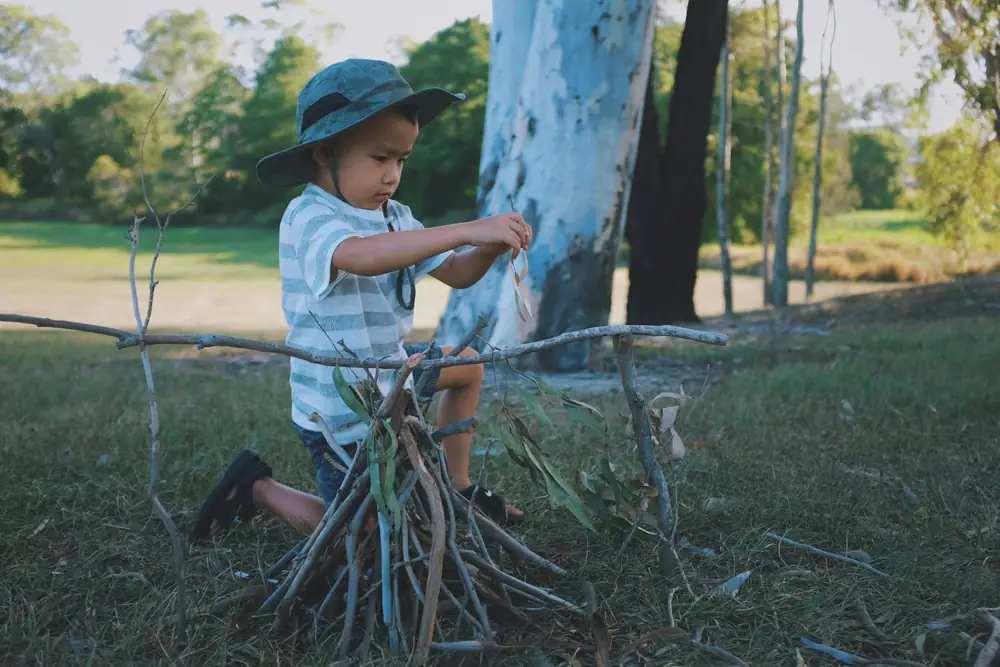
- Stick shapes. Make letters, animals or a house shape from sticks on the ground.
- Tent-peg helper. Let them push tent pegs in with a foot or hand the mallet to you. Being part of setting up camp is a big deal at this age.
- Bug hotel. Stack sticks, bark and leaves to create a small shelter for insects, then check back later to see who has moved in.
For school-age kids (6–9)
- Nature bingo. Make a simple grid before the trip with things to find: a feather, a Y-shaped stick, a heart-shaped leaf, a spider web. First to a line wins.
- Camp map. Give them a notebook and ask them to draw a map of the campsite, including the restroom, the tent, the fire ring and the best climbing tree.
- Leaf rubbing. Put a leaf under a sheet of paper and rub over it with the side of a crayon. Try different leaves and bark.
- Campsite jobs. Give them a real job with some responsibility: collecting kindling, filling water bottles, or being in charge of the lantern.
For tweens (10–12)
- Knots. Teach a few useful knots with a length of cord: a bowline, a taut-line hitch and a clove hitch. Then let them rig the clothesline.
- Cook a meal. Let them plan and cook one camp meal with you as assistant. Foil packets or wraps are a good start.
- Star spotting. On a clear night, use a printed star chart to find a few constellations. Lying on a picnic blanket in warm layers makes it a highlight of the trip.
| Activity | Gear needed | Energy level |
|---|---|---|
| Bucket collecting | Bucket | High |
| Water painting | Brush, cup of water | Low |
| Color hunt | Crayons or paint chips | Medium |
| Nature bingo | Printed card, pencil | Medium |
| Camp map | Notebook, pencil | Low |
| Knots | Length of cord | Low |
| Star spotting | Star chart, blanket | Low |
Give them a little freedom
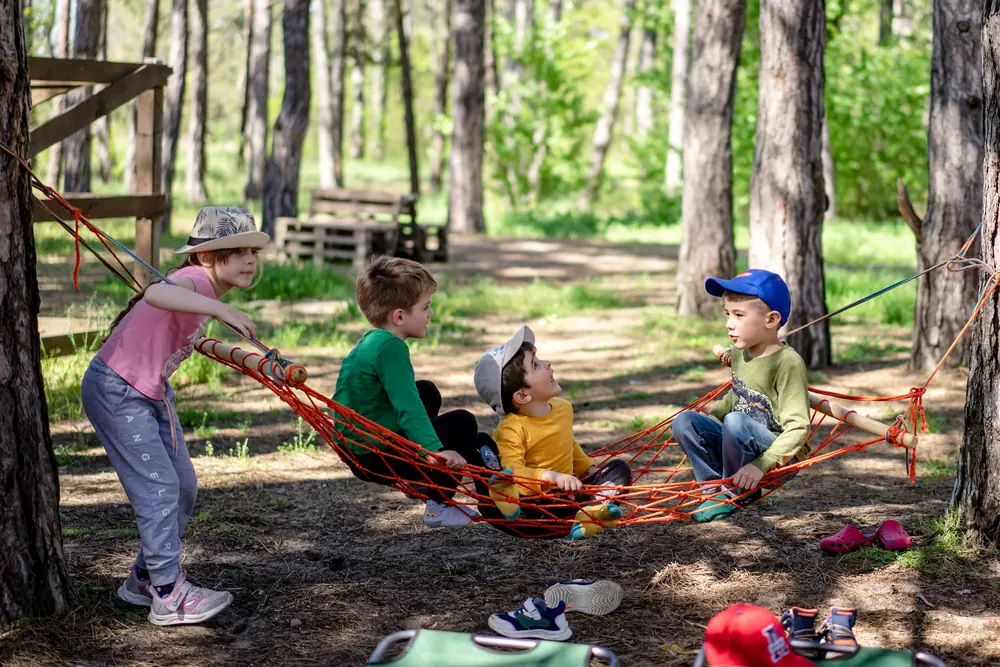
Much of the magic of camping for children is being allowed to explore on their own terms. Within safe, clear boundaries, let them wander, climb a low tree, or build a den without adult direction. You will often find they return with a story, a treasure or a new friend from the next site. Agree the boundaries first, and check in regularly, but try not to plan every minute.
Quiet evening wind-downs
As the light fades, switch to calmer games to help children get ready for bed: story-telling where each person adds a sentence, shadow puppets with a headlamp on the tent wall, or "I spy" with sounds instead of sights. These keep the evening special without winding children up right before bedtime.
The best camp activities are the ones children invent themselves. Your job is mostly to provide a bucket and a bit of time.
For wet days, we have a full list of indoor ideas in rainy-day camping with kids, and the activity box on our rainy-day kit checklist.
 How to Choose a Family-Friendly Campsite
 Helping Kids Sleep Well in a Tent
 Rainy-Day Camping With Kids: A Practical Plan