
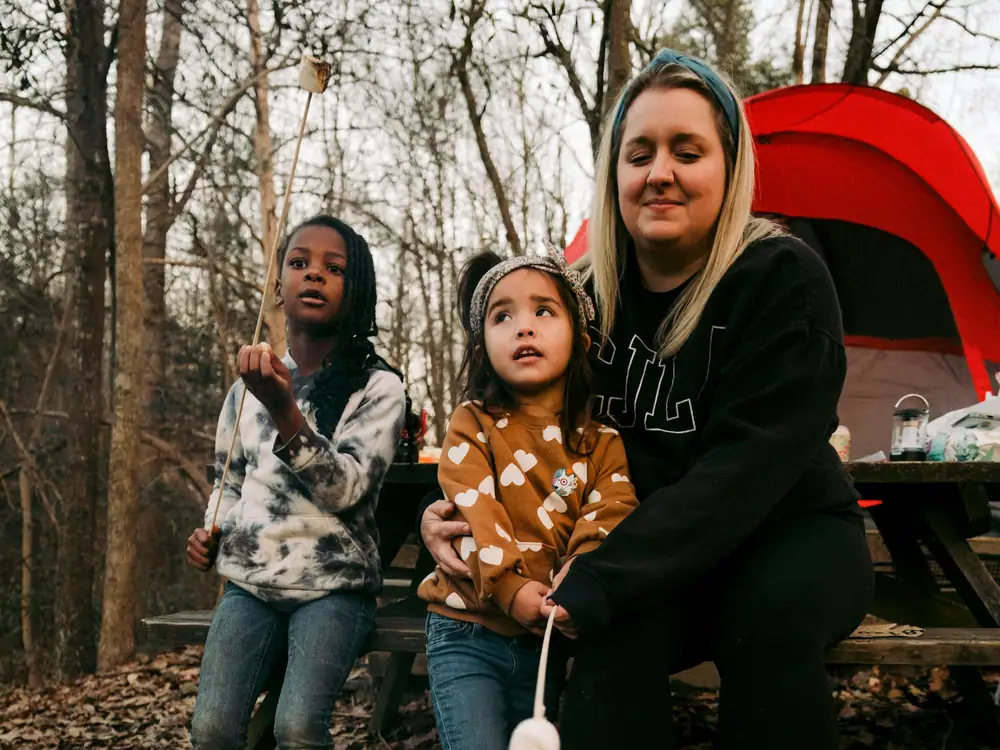
The best family camp meals are the ones you mostly prepared at home. Chop, marinate and portion before the trip, and camp cooking becomes heating, assembling and eating.
This checklist is intentionally short. Families tend to overpack the kitchen and then cook the same three things anyway. Everything here earns its place on a typical weekend, and the meal plan below uses ingredients that overlap so you are not carrying a full pantry.
The checklist
Cooking
Eating
Cooler & storage
Clean-up
Kid-friendly food staples
A simple two-night menu
| Meal | Day 1 | Day 2 | Day 3 |
|---|---|---|---|
| Breakfast | — | Pancakes from the squeeze bottle, fruit | Oats with toppings bar, hot chocolate |
| Lunch | Packed from home: wraps and fruit | Build-your-own wraps | Leftovers and snacks for the drive |
| Dinner | Pre-made chili or pasta sauce, reheated | Foil packets cooked on the grill | — |
| Treat | Toasted marshmallows | Baked banana with chocolate | — |
Day 1 dinner is always something you cooked at home and froze. It doubles as an ice pack in the cooler, and it means the first evening, when everyone is busy setting up, needs nothing more than a pot and a spoon.
Jobs kids can do
- Wash vegetables at the hand-wash station
- Set the table and fill water cups
- Stir pancake batter and wraps fillings
- Dry dishes and pack them away
Adults only
- Lighting and running the stove
- Anything with the sharp knife for younger kids
- Carrying hot pots and the kettle
- Managing the fire
Keep a "kitchen zone" rule: small children stay outside a clear line, marked with a rope or a row of stones, while the stove is lit. It turns a constant worry into one simple rule they can follow.
Packing the cooler so it lasts
A well-packed cooler can keep food cold for a full weekend. Chill the cooler overnight before the trip by putting a bag of ice or a few frozen bottles inside. Pack it in layers: frozen dinners and ice packs at the bottom, raw meat sealed in bags just above, then dairy, then fruit and vegetables at the top. Anything the children will reach for often, like drinks, yogurt tubes and cheese sticks, goes in a separate small cooler so the main one stays closed.
Keep the cooler in the shade and cover it with a blanket or sleeping pad during the day. Drain meltwater once a day, but keep the ice itself. Frozen water bottles are especially useful with kids: they keep food cold and, once thawed, become drinking water.
After the trip
When you get home, wash everything in the kitchen box, restock the dry goods, and store the box packed and ready. Add a note of anything you ran out of or never used. Next time, the kitchen will take five minutes to load.
 Baby & Toddler Camping Checklist
 Kids Packing List by Age
 Family Sleep Kit Checklist