The family camping checklist: what to pack, how to sleep and how to keep it simple
The first family camping trip usually starts with a list on the back of an envelope and ends with a car so full the kids are wedged between sleeping bags. Somewhere in the middle, a toddler finds the only puddle for miles, the baby refuses the portable crib and someone realizes the headlamps are still on the kitchen counter.
None of that means family camping is too hard. It means that camping with children is a different activity from camping as an adult, and it needs a different list. Adults can shrug off a cold night or a late dinner. Children, and especially the under-fives, cannot. The good news is that almost every problem on a family trip is predictable, which means it can be packed for.
This guide walks through the ideas behind our checklists: how to pack by age group, how to make the tent a place children actually sleep, how to keep meals simple, what goes in a family first-aid kit, and what to do when it rains. Each section links to a printable checklist so you can go from reading to packing in one step.
Pack by age, not by activity
Most camping packing lists are organized by activity: shelter, kitchen, clothing, tools. That works well for adults because every adult needs roughly the same things. In a family, a six-month-old and a nine-year-old have almost nothing in common except that both need to be warm and fed. Packing by age group makes the list shorter and more honest: you only pack what each child will actually use.
Babies need a safe sleep space and a feeding routine. Toddlers need containment, spare clothes and something to dig with. Preschoolers need rain gear and a few rules they can remember. School-age kids need their own bag and a job. Use the tabs below for a quick view, then open the full list for your children's ages.
Sleep
- Portable crib with firm, flat base
- Wearable sleeping bag
- Two layers of sleepwear
- Dim red night light
Day
- Carrier
- Sun hat and shade cover
- Feeding kit and thermos of hot water
- Diapers, wipes, changing pad
Keep the sleep space clear: no pillows, loose blankets or soft toys.
Sleep
- Sleep sack or toddler bag
- Pad under the whole bag
- Comfort item from home
- Potty for night trips
Day
- Rain suit and boots
- Bucket and spade
- Snack pouches
- Bright top for easy spotting
Crawl the site at toddler height and flag guy lines before letting them roam.
Wear
- Rain jacket and pants
- Two warm layers
- Extra socks and underwear
- Warm hat for the fire
Own bag
- Headlamp
- Water bottle
- Favorite book
- Whistle on a zipper pull
Teach "hug a tree" and practice the whistle before the trip.
Wear
- Quick-dry layers, no jeans
- Broken-in shoes plus water shoes
- Fleece and puffy
- Sleep clothes kept dry
Own jobs
- Pack their own daypack
- Fill water bottles
- Look after the lantern
- Check the first-aid kit
Give older kids one real family job; it builds confidence and saves you time.
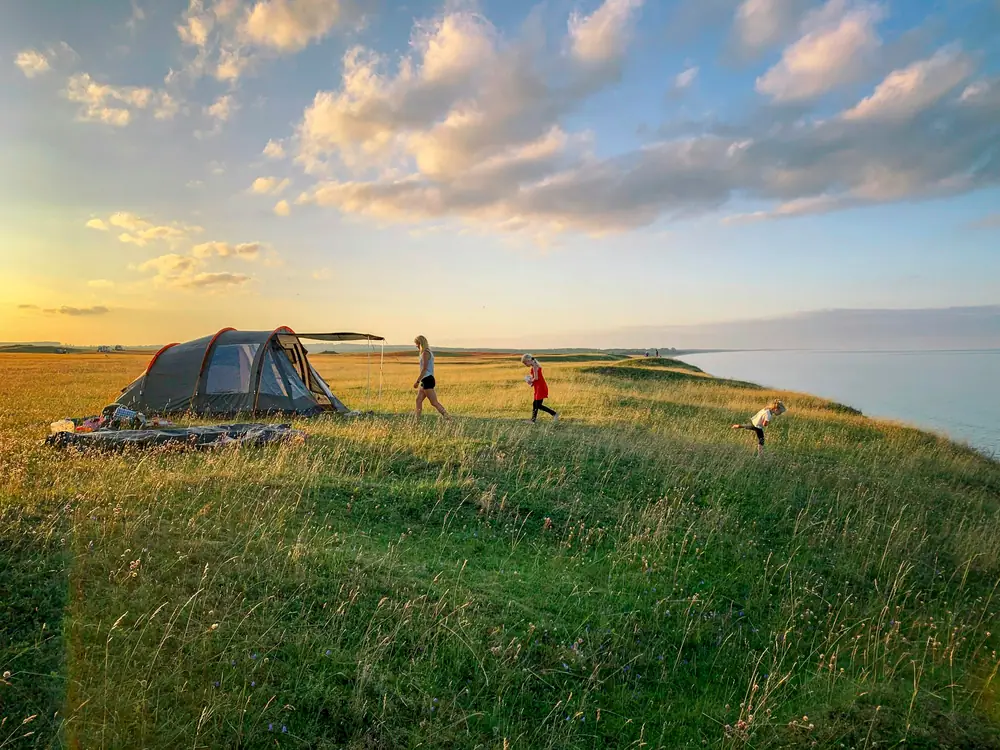
The baby & toddler list
Safe sleep, feeding, diapering and the small comforts that keep little ones settled. Open the checklist.
Make the tent a place children sleep
Ask parents about their hardest camping night and most will describe the same thing: a child who would not settle, then woke cold at 3 a.m. Sleep is where family trips are won or lost, and the fixes are more about routine and insulation than about expensive gear.
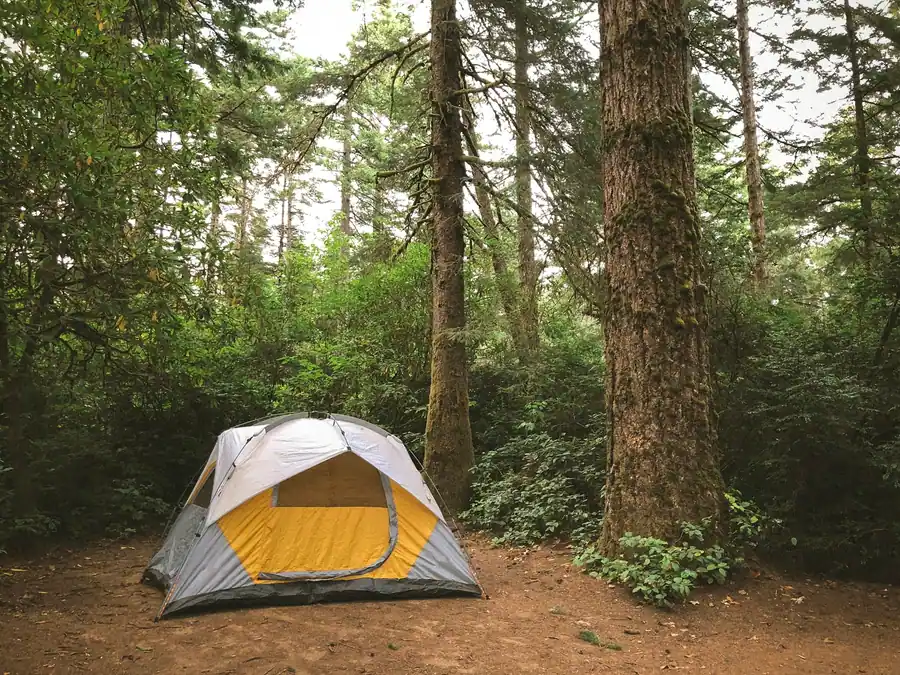
Start with what is under the child, not what is on top. The ground pulls heat away far faster than air does, and children wriggle off their pads onto the cold tent floor. A wide pad, or two pads pushed together under a sheet, keeps them on something warm all night. A child-length sleeping bag or a wearable sleep sack is warmer than an adult bag, because there is less empty space to heat.
Then bring the bedtime routine from home. The same books, the same song, the same comfort item and the same rough bedtime tell a child's body it is time to sleep, even in a tent. Summer light is the other big challenge; pitching where trees shade the morning sun and using eye masks for older kids both help.
Cold from below, not above, is what wakes children in the night. Fix the pad before you upgrade the sleeping bag.
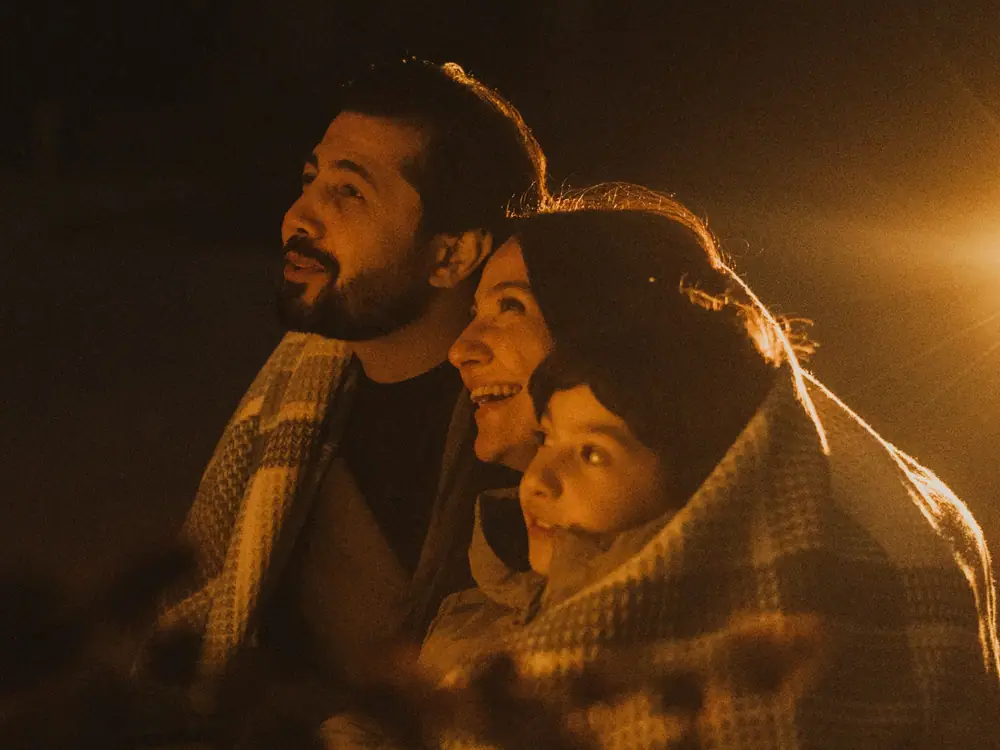
The family sleep kit
Tent layout, pads and bags by age, and a routine that travels. Open the checklist.
Keep meals boring (in a good way)
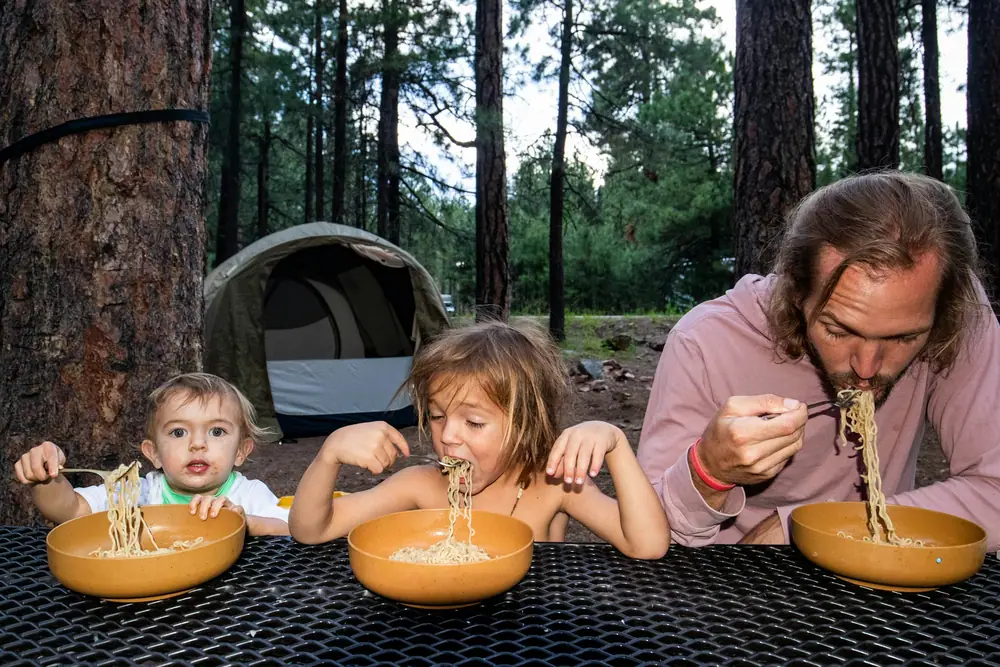
Camp cooking with kids is not the time to try a new recipe. Children who are tired, hungry and excited will eat familiar food, especially if they helped make it. The simplest approach is to cook the first night's dinner at home, freeze it flat, and use it as an ice pack in the cooler. On arrival, it needs one pot and ten minutes.
For the rest of the trip, build meals around a few overlapping ingredients: tortillas for breakfast wraps and lunch, cheese and vegetables for both, pancake mix pre-measured in a squeeze bottle, and foil packets for the second dinner. Let children build their own plates. A toppings bar for oats or wraps turns breakfast into an activity and ends most arguments about what to eat.
Kids can
- Wash vegetables and fruit
- Build their own wraps and foil packets
- Set the table and fill water cups
- Dry and pack away dishes
Adults handle
- Lighting and running the stove
- Sharp knives for younger kids
- Hot pots, kettles and the fire
- Food storage at night
Safety and first aid, sized for kids
The good news about family camping is that most injuries are small: scraped knees, splinters, bites, a bit too much sun. A first-aid kit built for those, plus a few simple rules, covers the vast majority of what happens. Most store-bought kits are designed for adults, so top yours up with child-sized items, a good pair of tweezers, a tick tool and the medicines your doctor has recommended for each child.
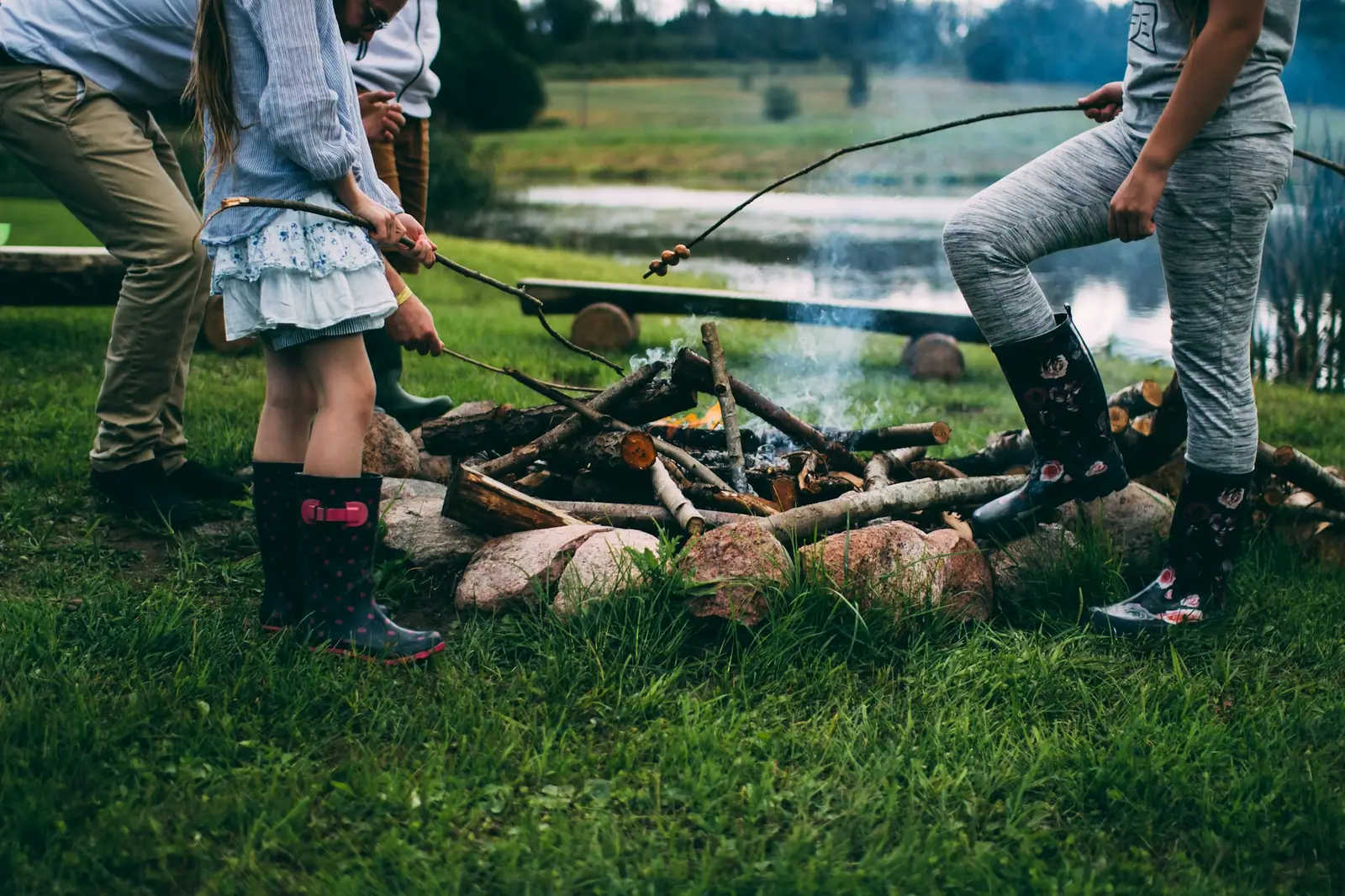
Rules are as important as kit. Mark a circle around the fire that children stay outside. Set clear boundaries for how far they can wander. Teach "hug a tree": if lost, stop, stay put and blow the whistle three times. Keep children away from water unless an adult is right there and watching. Short, clear rules that children practice before the trip are remembered far better than warnings shouted across the campsite.
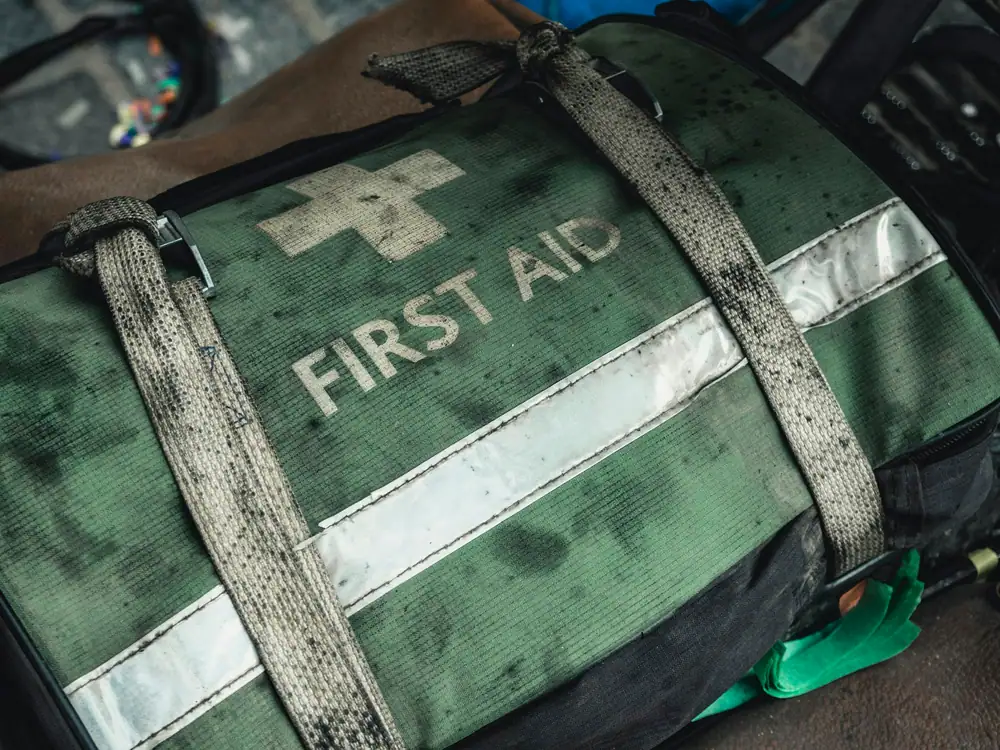
The family first-aid kit
Scrapes, splinters, stings and sun, plus the information card to carry. Open the checklist.
Plan for rain, then enjoy it
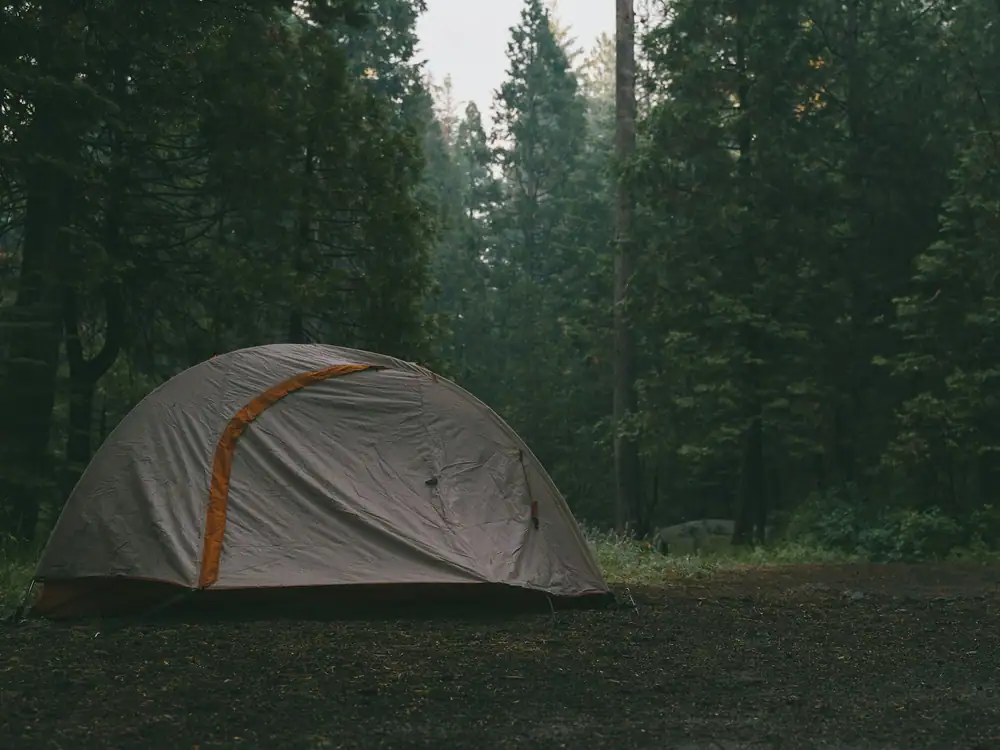
Rain rarely ruins a family trip. Being unprepared for it does. The single most useful item for a wet weekend is a large tarp rigged over the picnic table, which gives you a dry living room outside the tent. Add a pile of spare socks, trash bags to line each child's bag, and a small box of games and drawing supplies that only comes out on a wet day.
Light rain can be an adventure: puddle jumping, snail spotting and rain-drop races down the tarp. Steady rain is a good excuse for card games and hot chocolate. Thunder is the one exception; when you hear it, move everyone into a hard-topped car or building until it passes.
Let the campsite be the playground
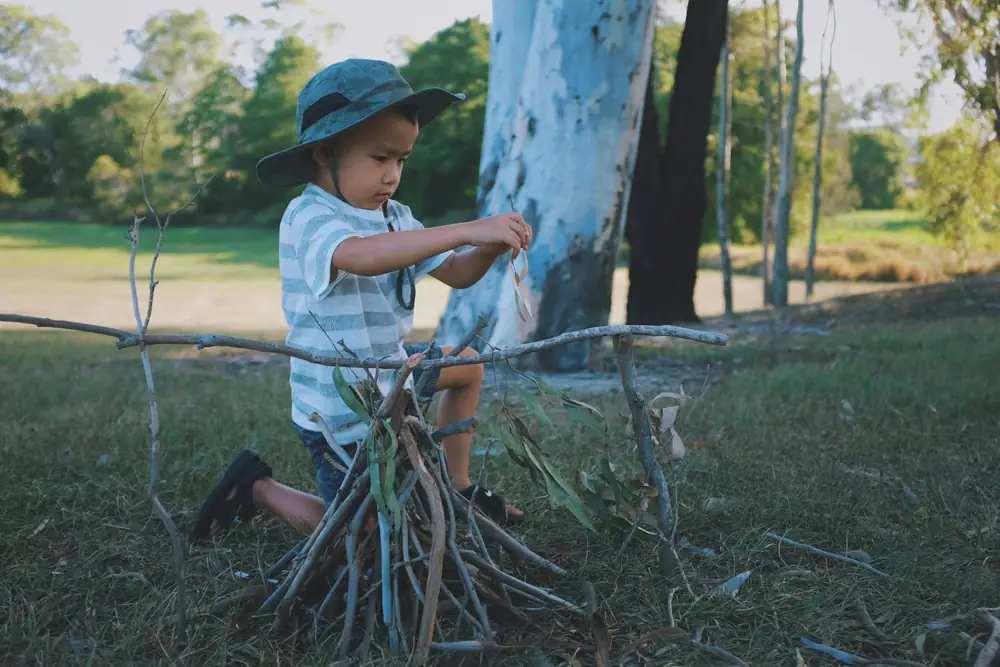
One of the nicest surprises of family camping is how little entertaining children need. Sticks, stones, water, a bucket and a bit of freedom keep most children busy for hours. Give them ideas to start, like a nature color hunt, stick shapes or a camp map, then step back. Older children love having a real job: collecting kindling, being in charge of the lantern, or rigging the clothesline with a proper knot.
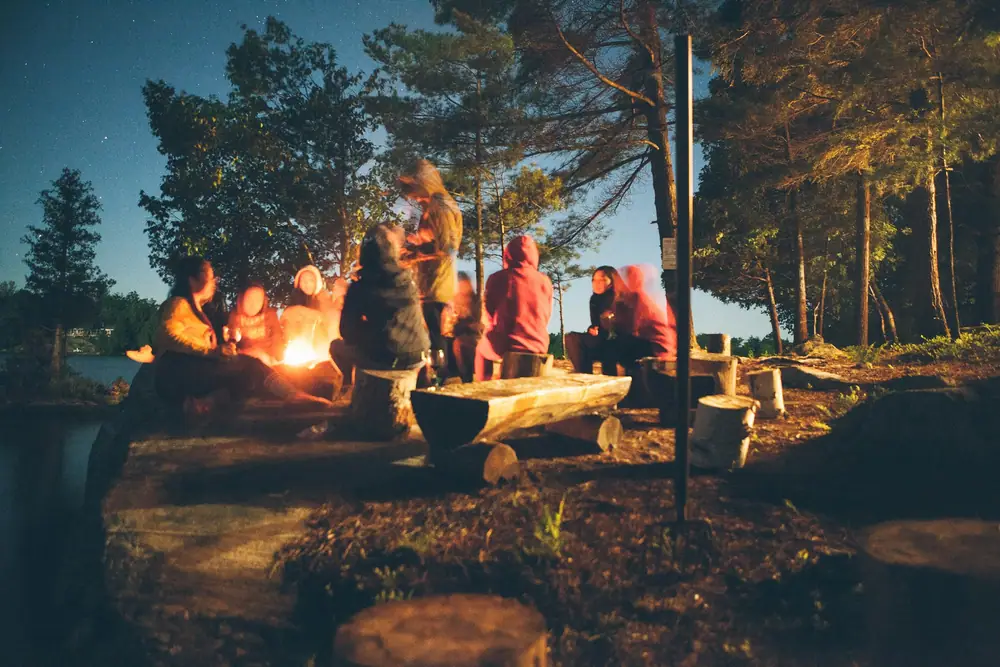
In the evening, wind down with quieter games: story-telling, shadow puppets on the tent wall, or star spotting from a picnic blanket. These moments are often what children remember most, long after they have forgotten the drive or the rain.
Start small and build up
The best first trip is short, close to home and close to the car. One or two nights at a developed campground with restrooms, drinking water and a playground is plenty. It is fine to pack up early if things are not working. Every trip teaches you something, and the list gets shorter and more accurate each time.
Print the checklists that match your children's ages, check things off as you pack, and keep the lists in the car for next time. Then go and find that puddle.